Quantum Superposition: Where Everything’s Possible Until You Look

Imagine a universe where your morning coffee is both steaming hot and inexplicably ice-cold until you dare to take a sip. Welcome to the whimsical world of quantum superposition, where particles channel their inner multitalent and exist in multiple states at once. This concept, as mind-boggling as it sounds, is central to quantum mechanics and challenges our very understanding of reality. It's a place where everything's possible until you look, and, as they say, beauty is in the eye of the beholder. Dive into this exciting realm, where Schrödinger's cat is both alive and dead, and let’s not forget about how this magical quantum party trick can make everyday objects like coins and pizzas transform into quantum marvels. The only rule here? Prepare to embrace chaos with a big smile!
Before we dive deeper into this fascinating concept, let's recall that quantum superposition isn't just a theoretical playground for scientists! It has real-world implications and, more importantly, it’s accessible to everyone who enjoys a sprinkle of mystery mixed with a healthy dose of humor. So, grab your quantum coffee and brace yourself for a journey that lets you look at the universe like never before without losing a single wink of sleep over paradoxes or the nature of reality itself. Buckle up as we unravel the mystique of particles that do not seem to care about clarity!

In the quantum realm, particles behave in strange and often hilarious ways. They're a bit like children in a candy store, refusing to choose just one sweet treat. Instead, these particles exist in multiple states at once, a phenomenon known as superposition. It's a bizarre notion but one that's born out of necessity when trying to explain the tiny, unpredictable world of quantum mechanics. Unlike the world we experience daily, where a light is either on or off, a particle in superposition behaves as if it's doing both simultaneously until someone comes along and observes it. Our mere act of looking nudges the universe into making a decision, akin to the metaphorical morning nudge deciding if you're actually awake or just pretending.
If you've ever been told that you can't be in two places at once, then prepare to have your socks knocked off. In the quantum world, not only can particles be in multiple places at the same time, but they can also adopt entirely contradictory states. Imagine flipping a coin, and it lands as both heads and tails until you decide to peek. This wild behavior is at the heart of quantum computing, an evolving field that harnesses the power of superposition to tackle complex problems. By allowing qubits (quantum bits) to inhabit multiple states, these machines are primed to solve tasks that would baffle even the most advanced classical computers.
Now, let's unravel the infamous Schrödinger's cat thought experiment, a whimsical exploration of superposition that German physicist Erwin Schrödinger devised to highlight the weirdness of quantum mechanics. In this curious tale, a cat is placed in a sealed box with a vial of poison set to release upon detection of a radioactive decay. Until the box is opened, the cat is simultaneously alive and dead. This mental exercise, while morbid, illustrates the peculiar nature of quantum superposition, a state where two or more possibilities can coexist. It's an invitation to stretch our imagination and accept that reality might be more quirky than we can fathom.
The magic of superposition isn't confined to cats and coins. Would you believe that even something as mundane as a pizza could become a quantum marvel? Imagine ordering your favorite pizza, topped with pepperoni, mushrooms, and olives. In the world of quantum superposition, your pizza can exist with and without those toppings at the same time! Only when you open the box, causing the quantum wavefunction to collapse, will it choose one delicious state over the other. While this might sound like a foodie's dream (or nightmare), it’s a metaphorical way to understand the chaotic beauty of superposition.
But enough about theoretical pizzas and cats! Let's take a glance at how this jaw-dropping concept has paved the way for new technologies. Quantum superposition is crucial for the development of quantum cryptography, a method that promised unbreakable encryption. The magic lies in the ability to transmit information through particles in superposition states that make interception practically impossible. If someone tries to spy on or disrupt the data, the very act of observing will cause the system to change, alerting both the sender and receiver instantly. It's like a cloak of invisibility for your emails!
In the realm of physics, quantum mechanics sometimes seems like a rebellious teenager. It doesn't like to follow traditional rules and isn't afraid to delve into the absurd. This quality is epitomized in superposition, challenging our classical intuition and forcing us to confront questions about the nature of observation and reality. Physical intuition often fails in this domain, but quantum theory's mathematical framework holds firm. For those willing to approach with an open mind and sense of humor, the rewards include fresh perspectives on topics ranging from the most minute particles to the grand scales of cosmic interactions.
Indeed, if you're wondering why particles would want to maintain such dual roles, look no further than a quantum particle's love for freedom. By existing in a state of superposition, a particle can explore all possibilities simultaneously, only cementing its trajectory when observed. It's like being allowed to try multiple outfits, dwell in parallel universes, or explore your career options simultaneously without committing until someone intrudes on your dreamy quantum fashion show. This is not just a delightful stretch of imagination but a core tenet of quantum theory, tantalizing and frustrating enthusiasts and physicists alike.
By now, you might be asking if we mere mortals can experience or control such quantum antics. Enter the burgeoning field of quantum computing, a realm that actively employs superposition to revolutionize information processing. In classical computing, bits are either 0 or 1; however, qubits can exist in multiple states at once, much like a coin spinning in mid-air. This property enables quantum computers to analyze vast datasets, crack complex codes, and simulate intricate systems at speeds unheard of before. Imagine a world where quantum computing can map the most efficient route to work, forecast climate change, and perhaps even compile our grocery lists!
Yet, a nuanced understanding of superposition isn't only the stomping ground for cutting-edge technology. It also feeds into our philosophical musings. The notion that reality doesn't solidify until perceived echoes indefinitely in debates about consciousness, free will, and the fabric of the universe itself. Are we creating reality by observing it? Could we be actors shaping our destiny every time we look upon the world? These ponderings invite us to question not just our interpretations of quantum mechanics but of existence itself, illuminating the path for dreamers, thinkers, and stargazers alike.
For those more inclined towards hands-on activities or visual learning, here's a simple analogy: Picture a room full of light switches. Each switch represents a different quantum state. Until someone enters the room and starts flipping switches, the room exists in all possible lighting configurations. Superposition is akin to this room being both fully lit and completely dark at the same time. The simple act of opening the door and observing the room compels it to adopt one definitive state. In this light (pun intended), understanding superposition becomes as intriguing as it is perplexing!
As much as we've made light of quantum behaviours and their whimsical ways, it's worth noting that the precise mechanics of quantum superposition still hold plenty of mystery. Quantum physicists work tirelessly, crafting elaborate experiments and sophisticated models to explore the depth of these phenomena. One shining example includes the groundbreaking double-slit experiment, where particles such as electrons or even large molecules are shown to display wave-like interference patterns, reinforcing that particles truly exist in superposition when not observed.
Speaking of the double-slit experiment, it's a perfect carnival act to illustrate quantum dazzle. Imagine shooting small particles through two slits in a barrier. When not observed, these particles form an interference pattern on the screen behind, reminiscent of water ripples crossing paths. However, introducing an observer to determine through which slit particles pass leads to the disappearance of interference, leaving us with two ordinary bands. This striking feature of superposition exposes the unpredictable duality nature of particles, nudging us closer to the conclusion that our understanding of reality is still in its infancy.
Thus, the magic and mystery of quantum superposition arouses curiosity across disciplines, nurturing a playful spirit that often fuels the great intellectual adventures. From classrooms to boardrooms, conversations dabble into what lies beneath the quantum hood, nudging us beyond conventional thinking. It's a reminder that although the world of quantum mechanics appears strange, embracing its delightful chaos allows us to peel back layers of reality, inspiring scientific advancement and stirring creativity with a touch of joy.
Engaging in the theater of quantum superposition calls for an open mind and a touch of imagination. Consider the role of the observer, which unlocks infinite quantum scenarios until observed, much like a director calling action. This collaboration between participant and environment is foundational for unlocking quantum magic, urging quantum hopefuls to explore philosophical edges where consciousness, reality formation, and quantum mechanics intersect. To dance along this edge is to revel in a wonderland where the possible extends beyond imagination.
Unraveling superposition invites both seasoned physicists and eager learners to question the interconnections between the observer, reality, and the realms of possibility. Where conventional wisdom sets paths, quantum inquiry twists, turns, and defies, shaking off conventional chains. At its heart is an exhilarating refusal to be definitively one thing or the other, much like enjoying a symphony without being restricted to a single note. Throughout history, such reframing increments have driven humanity's understanding forward, encouraging us to reconsider the cosmic tapestry of which we are a part.
Beyond academic halls, stories of particle play narrate the very fabric of storytelling. Quantum narratives blurring time, space, and identity find resonance in fiction, art, and theater. They explore the myriad forms our world could take, casting ores for our cosmic boats to sail uncharted waters. By channeling our inner quantum cat, we tap into the ability to juggle frameworks, dip into inspiration wells, and perhaps leave breadcrumbs of brilliance for explorations we have yet to begin. It's an invitation to perceive narratives with fresh, boundless eyes, unshackled from linear thinking.
While quantum superposition forms a pillar of theoretical physics, its playful connotations offer much more than abstract exercise. They impart life lessons about keeping options open, embracing uncertainty, and delighting in boundless potential. After all, who says life has to follow a straight line? By allowing quantum behaviors to inform us, we can draw parallels with personal growth and measure our journeys not just by definitive stations but by the explorative tracks we lay.
In contemplating superposition, one learns that understanding need not be the absence of mystery. Instead, it thrives alongside it, as each revelation leaves pathways for yet unanswered questions. Here lies the vital essence of intellectual exploration—foregoing the frustration of the unanswered for the thrill of infinite wonder. By adopting this approach, quantum concepts become more than scholarly pursuits; they morph into illumination exercises that release cognitive boundaries suspended by familiar ties.
An understanding of superposition nurtures mindful living, where we're encouraged to become aware of multiple truths—learning from diverse paradigms and integrating validation within action. When coupled with scientific inquiry, such contemplations allow for richer exploration. As the observer takes a bow on the cosmic stage, quantum mechanics shines the spotlight on possibilities as scenes unfold, creating moving tableaux of cosmic ideas ready for the curious mind to untangle and share with love.
With each retelling of Schrödinger’s paradox, we confront our perceptions of life and death, finding depth within paradoxes as we interact with reality’s layers. Inner quantum cats nudge us to relinquish limitations, considering life like vapor waves shifting between seen and unseen, known and unknown. Whether dormantly reflecting dual existence or basking within one possibility, quantum pandas invite us to embrace this exquisite circus, crafting lifetime adventures onto life’s great canvas.
Still unsure of superposition? Consider another illustrative venture—virtual reality, an artistic phenomenon transporting participants into imagined realms that blur perceptual lines. Here, participants hover between simultaneous states within digital landscapes, akin to stepping into quantum arenas where tuples coexist and continuum unfolds at whim. Through these ventures, the profound interrelatedness of experience and imagination becomes clear, unveiling our innate capacity to craft realities alongside, within, and among.
It’s here, at the intersection of curiosity and creativity, where quantum superposition casts its glow. Welcoming philosophers, dreamers, and intrepid explorers, it sweetly disrupts our interpretations of space, time, and existence—laying grounds for breakthrough discoveries through inventive thinking. By embracing unpredictability with open hearts, we align our perspectives with quantum thinking foundations, driving fresh insights and elevating the art of questioning to cosmic levels.
As we bring our journey to a close, quantum superposition begs not just understanding but participation. It enchants us with opportunities to question and explore existence itself, its narratives unfolding uniquely for each observer. While particles live simultaneously between states, so too can we bridge imagination and reality, crafting senses of clarity amidst chaos. Channeling Schrödinger’s cat becomes not just an analogy but an inspiring reservoir for life’s abundant plurality.
Stepping into this curious world offers not only a glimpse into the quantum multiverse but serves as a call to action—welcoming you to look upon the marvelous and once mundane with scintillating curiosity. Gathering whimsical insights from science’s grand stage ensures breathtaking views on this intellectual journey together, punctuated with laughter, thought, and wonder. Remember, the quantum universe waits—be not deterred by paradox, but emboldened by its infinite potential.
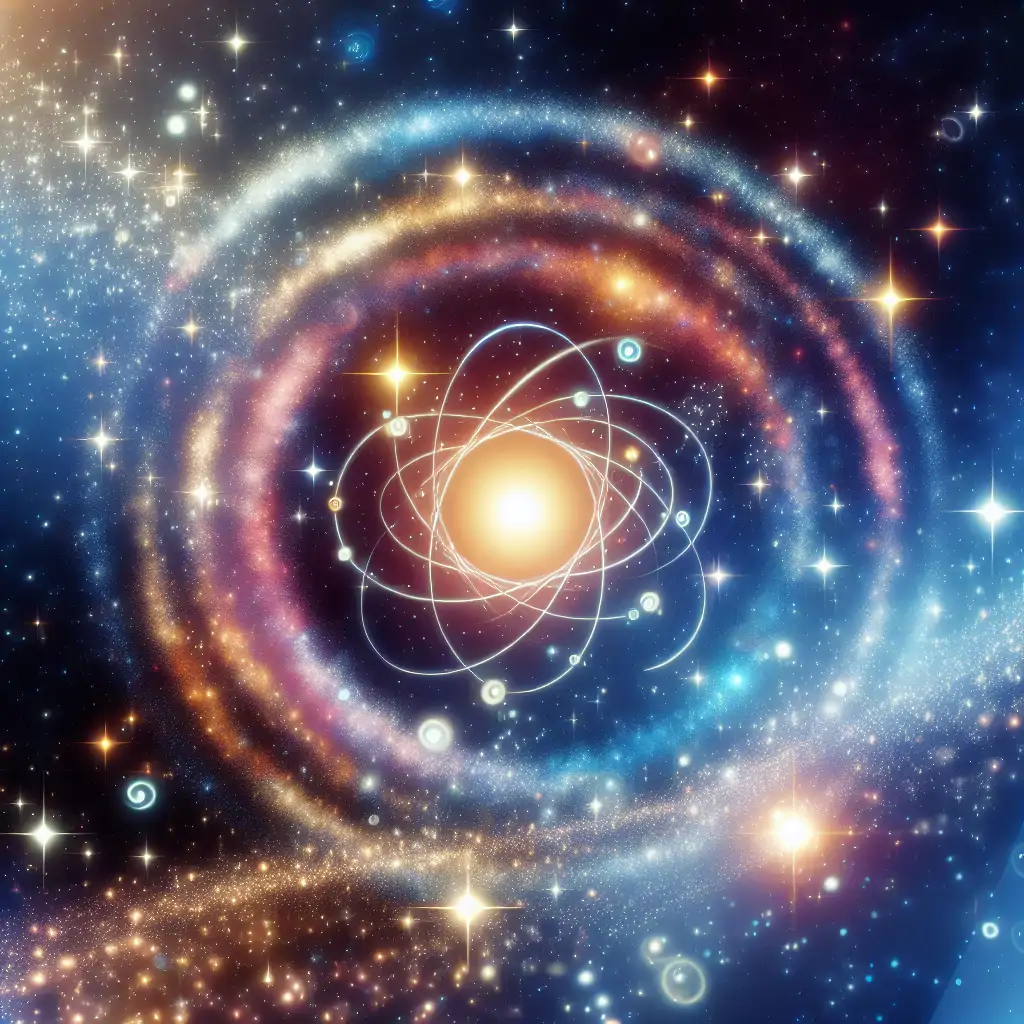
With our dive into the world of quantum superposition complete, it's time to pause and reflect on the extraordinary journey we've embarked upon. In confronting the quantum realm, we've unlocked a playground of possibilities where the rules are delightfully fluid, and outcomes are as whimsical as they are profound. Superposition challenges our perceptions of reality, daring us to imagine where imagination and science intertwine, offering a fresh perspective on what’s possible when we embrace uncertainty.
We’ve ventured through intricate thought experiments, marveled at particles’ rebellious behaviors, and emerged with awe-inspiring insights into our universe’s inherent chaos. Superposition serves as a reminder that the pursuit of knowledge knows no bounds, encouraging processes that transcend conventional thinking to illuminate unexplored paths. Armed with newfound wonder, we leave empowered to approach mysteries unshackled, guided by curiosity’s inextinguishable flame.
Let us embrace this delightful chaos, much like Schrödinger’s cat both alive and pondering infinite universes. As we look forward to uncovering new questions and revelations, may we always accept that reality dances to its own tune, much like our particles and their enigmatic states. Continue delving with courage, uninhibited by the constraints of certainty, and prepare to be surprised. After all, from grand chaos springs cosmic beauty.
Thanks for taking the time to read my article! You may also find this one interesting.
The Heisenberg Uncertainty Principle: A Quantum Balancing ActTil next time! Prijanka

Prijanka
Prijanka is a wellness coach and inspired blog writer. Drawing from her expertise in holistic health and her talent for motivating others, she writes insightful articles that empower readers to live healthier, more balanced lives, blending practical advice with a genuine passion for well-being.
A proud member of the B-Team
If you're curious to dive deeper into related topics, then you may find these external links useful.
1. Quantum Basics
A beginner-friendly introduction to quantum mechanics, including the concept of superposition, for readers new to the subject.
https://ocw.mit.edu/courses/8-04-quantum-physics-i-spring-2016/pages/video-lectures/part-1/2. Quantum Computing 101
An overview of quantum computing, explaining how the principles of superposition and entanglement are applied in modern technology.
https://www.ibm.com/topics/quantum-computing3. The Double-Slit Experiment Explained
A comprehensive breakdown of the famous double-slit experiment, illustrating the principles of wave-particle duality and superposition.
https://en.wikipedia.org/wiki/Double-slit_experiment4. Schrödinger's Cat Paradox
An exploration of the Schrödinger's cat thought experiment, detailing its significance and implications in quantum theory.
https://www.scientificamerican.com/article/this-twist-on-schroedingers-cat-paradox-has-major-implications-for-quantum-theory/5. Quantum Cryptography Overview
Information on how quantum superposition enables unbreakable encryption methods, and the potential impact on secure communications.
https://scienceexchange.caltech.edu/topics/quantum-science-explained/quantum-cryptography©2023 - 2026 SP Software Solutions Ltd. All rights reserved.