Quantum Electrodynamics: The Light-Speed Symphony
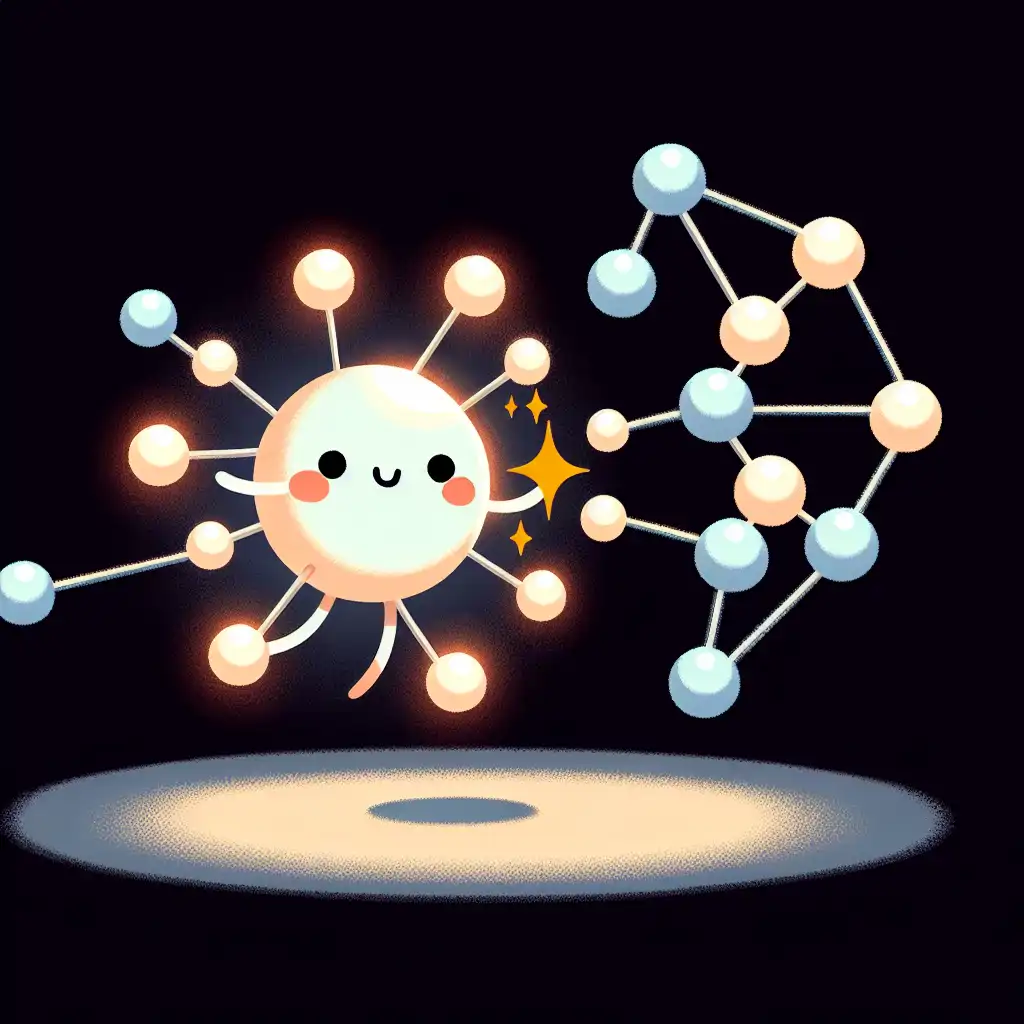
Welcome to the whimsical world of Quantum Electrodynamics (QED), where light and matter engage in a dazzling duet that defies the ordinary musings of classical physics. Imagine a stage where electrons waltz with photons, their steps orchestrated by the genius minds of physicists like Richard Feynman and Julian Schwinger. QED is not just a theory; it is the virtuoso that explains how light interacts with electrons, unraveling the quirks of our universe in a colorful tableau of mathematical precision. Yet, fear not the complex equations! This blog is your backstage pass to understand QED’s symphony, its virtual particles, and the magical diagrams we fondly call Feynman diagrams. By the end of our concert, you'll see how QED paved the way for revolutionary technologies like lasers, which can cut through steel or play your favorite vinyl record with equal finesse, and quantum computers that may one day perform calculations with such speed they’ll make your laptop look like a mere abacus. So, grab a seat, and let's dive into the electrifying world of QED, where quantum quirks and light-speed interactions await to both illuminate and inspire.
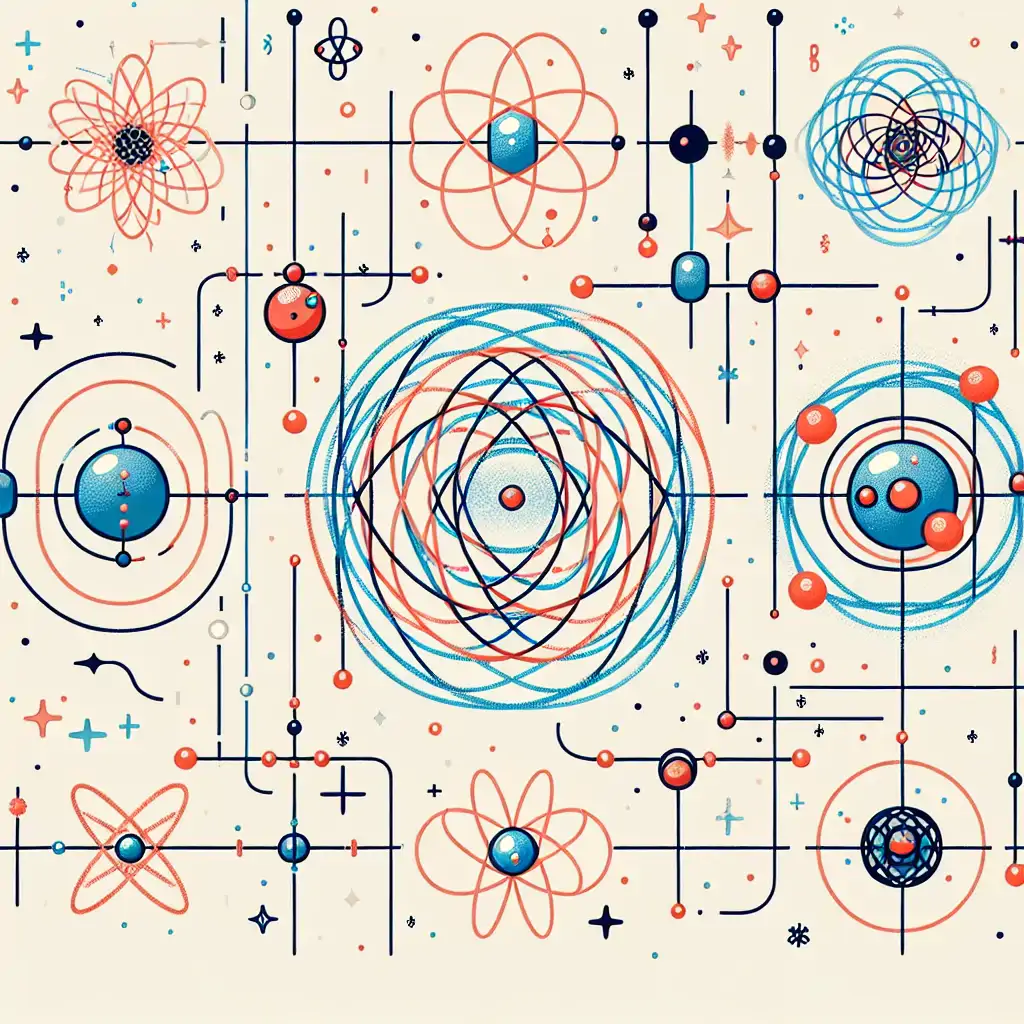
In the grand universe of physics, QED is the masterpiece that explains electromagnetic interactions. At its core, QED describes how light—a stream of particles called photons—and electrons interact. Think of photons as the quantum messengers of the universe—tiny packets of energy that zip around at the speed of light. When they interact with electrons, magic happens, or at least it seems like magic! This interaction is what allows us to see, communicate through optics, and even keep your microwaves buzzing. The real magic trick, however, lies in the fact that every photon-electron interaction can be described using QED, a theory with such precision it boggles the mind and makes it the most accurately tested theory in the history of science. But what exactly goes on in this quantum pas de deux?
To truly appreciate QED, we must embrace its complexity through something called 'Feynman diagrams.' Named after the legendary physicist Richard Feynman, these diagrams are more than just doodles—they are a pictorial representation of the mathematical expressions governing the behavior of subatomic particles. Imagine drawing a simple line—it represents a particle moving through space and time. Now, add some loops and squiggles, and you've got interactions, paths of particles, and how they exchange energy. This creative yet precise way of visualizing interactions was a revolutionary step, making complex calculations approachable even for those of us who think infinity is just an eight taking a nap. Feynman diagrams are like the sheet music of our quantum symphony, guiding us through every crescendo and diminuendo of information exchange in nature.
But what about those so-called 'virtual particles'? In the quantum realm, these are the sartorial choices of a universe dancing in virtual attire. Virtual particles are not 'real' in the classical sense; they don't exist in the physical world as detectable entities with permanent residence. Instead, they are fleeting whispers, mathematical constructs that appear to explain forces of interaction through what’s known as the 'perturbation theory.' In simpler terms, think of them as 'fillers' or improvisational jazz notes in the quantum orchestra, making temporary appearances only to vanish, leaving solid results and nothing else. They help us compute forces like electromagnetism and are key players in QED’s toolbox.
QED is widely acknowledged for its accuracy. One of the crowning achievements of QED is its prediction of the anomalous magnetic dipole moment of the electron—a quirky little deviation from what classical physics would predict. The remarkable thing is that QED agrees with experimental results down to the smallest quirks of decimal points—a testament to its accuracy. This level of precision is what makes QED the envy of other theories, standing as a paragon in the field of theoretical physics.
Let's take a look at how QED influenced technology: lasers are one of the most visible (and ironically, invisible) marks QED left on the world. Laser technology relies on the very principles governed by electromagnetic interactions between photons and systems of atoms. This exquisite control over light allows scientists to harness beams that have myriad applications—from medical devices reshaping your vision to industrial lasers powerful enough to etch metal with ease. Ever wanted a laser pointer to play with your cat? Thank QED for the fun and games.
Perhaps one of the most futuristic consequences of QED is its impact on the development of quantum computers. These machines, though still in their nascent stages, are predicted to be capable of performing computations at speeds unimaginable by today's standards. By exploiting principles found in quantum mechanics, such as superposition and entanglement, quantum computers promise to revolutionize fields requiring complex calculations. Think about the potential for advancements in materials science, cryptography, or even climate modeling. QED holds the key to unlocking these possibilities through its profound understanding of light and matter.

As our journey through Quantum Electrodynamics draws to a close, it becomes clear how incredibly significant this theory is in both understanding our universe and advancing technology. The symphony of QED, orchestrated by the likes of Feynman and Schwinger, will echo through the halls of scientific history, influencing everything from fundamental research to practical innovations like lasers and hints of quantum computers on the horizon. What started as a purely theoretical exploration has emerged as a guiding lighthouse for technological development. By peeling back the layers of QED, we gain a deeper appreciation for how electrons and photons interact in this grand opus, sharing stories of science and sparking new imaginations. Remember, whether you're switching on a light or making a video call, the marvels of QED are at play, conducting the orchestration of electrons, innovation's ensemble, and the brilliance of light.
Thanks for taking the time to read my article! You may also find this one interesting.
Quantum Spin: The Spirited Dance of Subatomic Hula HoopsTil next time! Prijanka

Prijanka
Prijanka is a wellness coach and inspired blog writer. Drawing from her expertise in holistic health and her talent for motivating others, she writes insightful articles that empower readers to live healthier, more balanced lives, blending practical advice with a genuine passion for well-being.
A proud member of the B-Team
If you're curious to dive deeper into related topics, then you may find these external links useful.
1. Understanding Quantum Electrodynamics
An article that explains the fundamentals of QED and its impact on modern physics, providing a foundational understanding of the theory's principles.
https://modern-physics.org/lamb-shift/2. Feynman Diagrams Explained
A detailed guide on how Feynman diagrams represent particle interactions in QED, making complex equations more accessible through visualizations.
https://www.sciencefocus.com/science/feynman-diagrams3. Virtual Particles and Their Role in Physics
An exploration of virtual particles, their theoretical nature in QED, and how they contribute to our understanding of forces and interactions.
https://modern-physics.org/virtual-particles/4. The Precision and Impact of QED
A discussion on the accuracy of QED, highlighting achievements like the anomalous magnetic dipole moment prediction and its experimental validation.
https://modern-physics.org/anomalous-magnetic-moment/5. QED's Influence on Technology
An overview of how QED has enabled advancements in technology such as lasers and quantum computing, bridging theory and practical innovation.
https://quantumconsortium.org/transportation-logistics/©2023 - 2026 SP Software Solutions Ltd. All rights reserved.